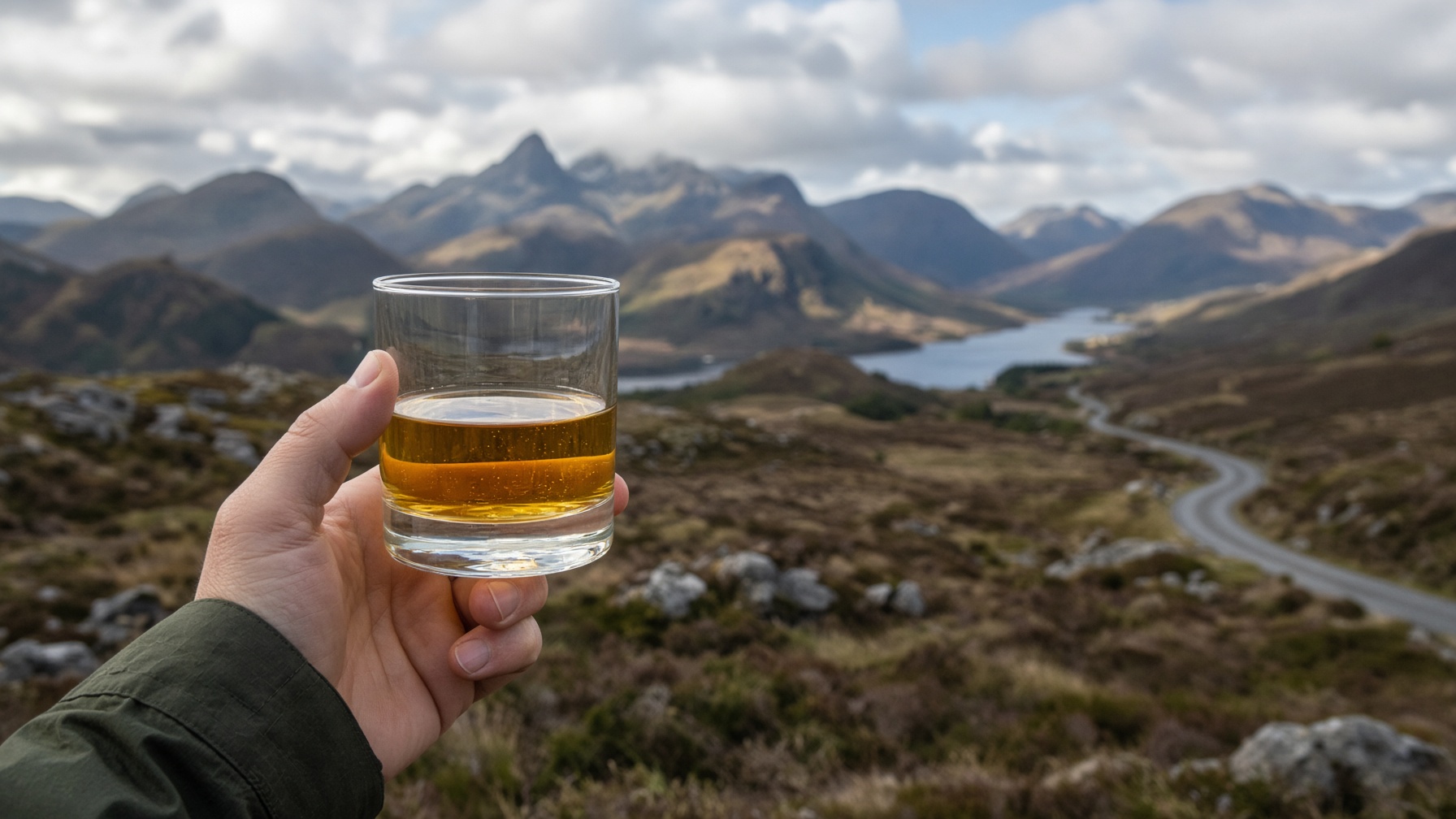
At Glenlivet House, we are in the heart of Whisky Country
There’s a particular kind of quiet you find on a single-track road in Speyside at nine in the morning, mist still sitting low over the barley fields, nothing moving except the odd pheasant and the occasional whiff of peat smoke drifting from a kiln somewhere out of sight. It’s the smell, more than anything, that tells you you’ve arrived somewhere properly old — a landscape that has been making the same drink, more or less the same way, since long before anyone thought to put a brown tourist sign on the roadside.
And that’s really the thing to understand before you go looking for “the” Scottish distillery trail: it doesn’t exist as a single route. It never has. What exists is a loose constellation of distilleries scattered across five whisky-producing regions, with pockets of density here and there, and only one of them — Speyside’s Malt Whisky Trail — bothering with official signage. Everything else is a trail you assemble yourself, one ferry timetable and one tasting-room booking at a time.
Speyside, where it all feels inevitable
Speyside is where the roads start to make sense. Drive through Dufftown and you’ll pass distillery after distillery, the pagoda roofs appearing over hedgerows like something out of a children’s book. The Malt Whisky Trail links seven of the big working names here — Glenlivet, Cardhu, Glenfiddich, Glen Grant, Strathisla, Glen Moray and Benromach — plus the Speyside Cooperage, where you can watch men build whisky barrels with nothing more than fire, oak and an almost hypnotic rhythm.
Strathisla, tucked into Keith, is the one that stops people in their tracks — it’s been distilling since 1786, making it the oldest operating distillery in the Highlands, and it genuinely looks the part: twin pagodas, a mill lade running past the courtyard, the whole picture. Cardhu, over in Rothes, carries its own quiet history — it was the first distillery officially pioneered by a woman, Helen Cumming, back when that was a considerably bigger deal than it should have been.
The Scottish Distillery Guide reckons three days does Speyside justice, and that feels about right — long enough to not be rushing between tastings, short enough that you still remember most of what anyone told you.
Islay, where the whisky tastes like the weather
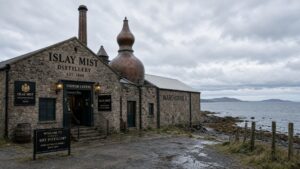
Islay is a different kind of place altogether — twenty-five miles of Atlantic-battered coastline, a population you could fit into a modest football stadium, and somewhere around ten working distilleries that between them produce some of the most divisive whisky in the world. You either love the smoke and the iodine and the sense that you’re drinking a campfire, or you don’t, and Islay doesn’t much care which.
The ferry from Kennacraig is part of the ritual — book it early, especially if you’re coming anywhere near Fèis Ìle, the island’s whisky festival, which marked its fortieth year in 2026 with ten days of open days, ceilidhs and whisky nosing that run from the end of May into early June. Every distillery takes its own day on the programme; Lagavulin, Bruichladdich, Caol Ila, Laphroaig and the rest each throw open their gates in turn. Rooms on the island, understandably, go fast — some say as early as February.
If you stick to the south coast, Laphroaig, Lagavulin and Ardbeg sit close enough together to walk between on a clear day, which happens to solve a problem we’ll come back to in a moment.
Further out — the Hebrides, for those with time to spare
Beyond Islay, scattered across the Hebrides, sits a newer and considerably more ambitious trail: Talisker and Torabhaig on Skye, Isle of Harris, Isle of Raasay, Tiree, North Uist, Benbecula — distilleries that feel less like visitor attractions and more like acts of quiet determination, built in places where it would frankly be easier not to bother. Their joint festival now runs each September, a week of tastings spread across the islands, with a different distillery hosting the finale each year.
This isn’t a weekend trip. It’s closer to an expedition, with ferry timetables dictating your days more than anything else. But the reward — empty roads, dramatic coastline, distilleries that still feel like someone’s genuine passion project — is considerable.
The part nobody writes about: getting between the drams
Here’s something the glossy whisky-trail brochures tend to skip over: Scotland’s drink-drive limit sits at 50mg per 100ml, noticeably stricter than England’s 80mg, which in blunt terms means a single generous dram can tip you over the edge. If you’re behind the wheel, this changes the whole shape of your day.
Most distilleries have long since worked out the solution — a “driver’s dram” bottled up to take home, so you leave with the whisky even if you can’t drink it there and then. Beyond that, there’s real pleasure to be found in handing the driving over altogether: a guided minibus tour through Speyside, the train line threading through Elgin and Keith, the wonderfully scenic West Highland Line down to Oban, or simply a bicycle on Islay’s quieter southern roads.
When to actually go
Whisky tourism in Scotland has been climbing steadily for years — spend has more than doubled over the past decade, and well over 60% of visitors to the major visitor centres now arrive from abroad. Distilleries have poured serious money into the experience to match: new tours, new tasting rooms, entire visitor centres rebuilt from the ground up.
May through September is when everything is busiest, and festival weeks especially need booking months in advance. But there’s a strong case for going against the grain — April or October, when the roads are quieter, the tour slots easier to find, and the Highlands still look extraordinary under a slightly moodier sky.
A few quick answers
How many distilleries make up the Malt Whisky Trail? Seven, along with the cooperage and the historic Dallas Dhu.
How long should you set aside? Three days for Speyside, a couple more for Islay, the best part of a week if the Hebrides are calling.
Do you need a car at all? Not necessarily — trains, guided tours, ferries, bicycles and local taxis cover most of it between them.
When does Islay’s festival run? The last ten days of May, most years.
In the end
Choose one region and let it be enough. Speyside if you want the gentle version, Islay if peat speaks to your soul, the Hebrides if you’ve got the days to spare for it. Book the popular tours ahead of time, work out who’s driving before anyone starts pouring, and don’t try to swallow the whole country in a single trip — some of this is meant to be savoured slowly, same as the whisky itself.
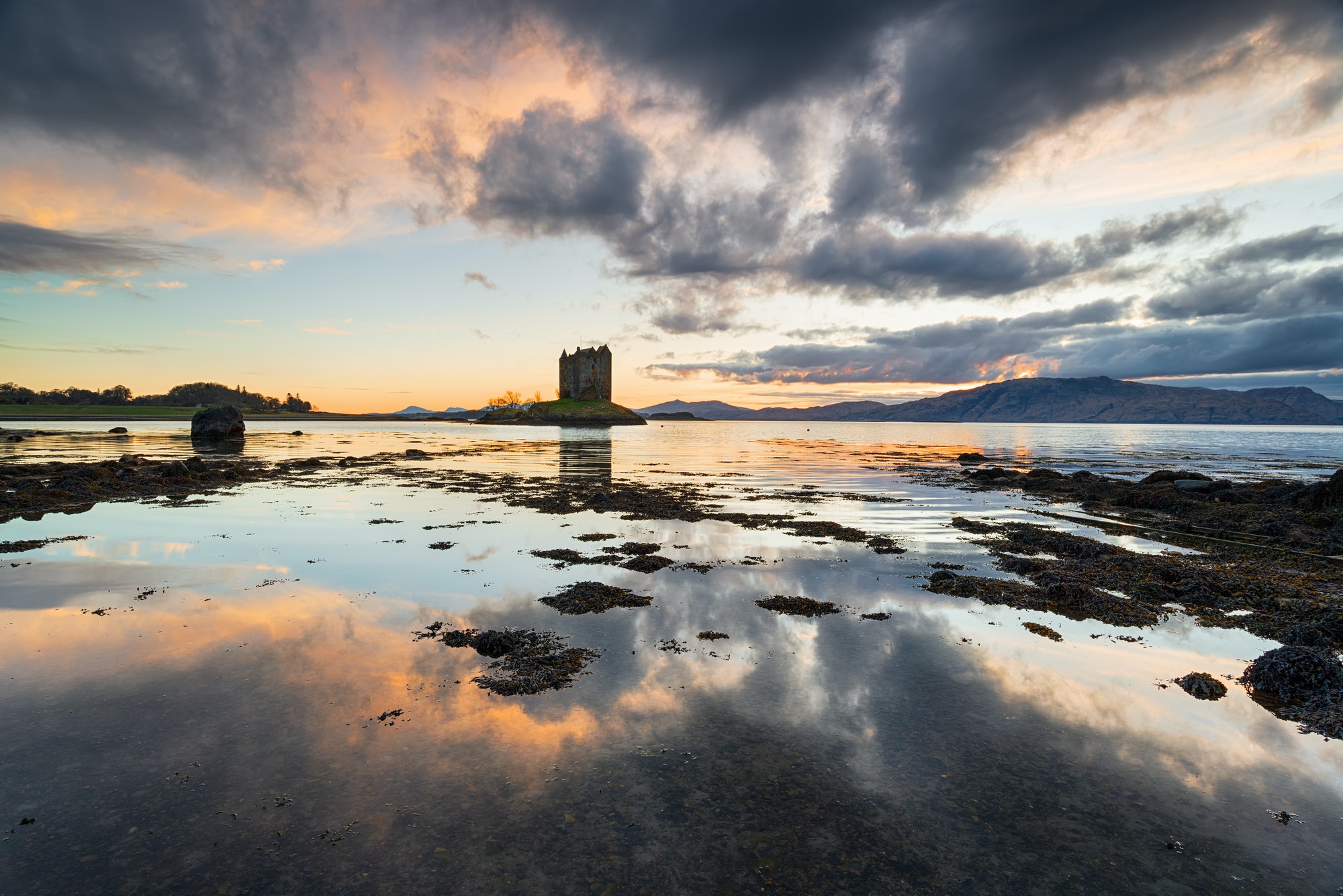

 There are advanced ways to stay safe in this modern world of technology. You can virtually turn your home into a fortress if you really want to. And hey, maybe you do want to. It’s nothing to be ashamed of. With crime statistics through the roof nowadays, you’d have to be a fool not to want to beef up home security. Trust me when I tell you there are simple ways to do this. What you need to do now is sort through your various options. Think Plexiglas windows, window security locks, and alarms, CCTV cameras, durable door bolts, and floodlights to guard your home’s exterior. Yes indeed, it’s time to start getting your home secured from intruders and thieves.